Too Shady for Solar Panels?
If you are wondering whether your roof is too shady for solar panels, the short answer is: not always. Solar panels do not need perfect, all-day sun to work, but too much shade can reduce output enough to hurt savings and make a system less worthwhile. The real question is not simply whether shade exists, but how much of it hits the roof, when it happens, and whether it affects only part of the array or the best sun hours of the day.
Shade from trees, chimneys, neighboring buildings, dormers, vents, and roof geometry can all change solar performance. In some cases, careful panel placement or panel-level electronics can make solar viable. In others, the site may be too shaded for a strong return. Below, you will see how to judge shade, what happens when one panel is shaded, and how a proper shading analysis for site inspections helps you make the right call.
How much shade is too much for solar panels?
There is no single universal cutoff, because shade affects systems differently depending on roof orientation, array layout, local climate, and equipment choice. A little morning or late-afternoon shade may have a limited impact. Heavy shade during peak production hours, especially late morning through mid-afternoon, is a much bigger problem.
As a practical rule, solar becomes harder to justify when large sections of the roof are regularly shaded during the sunniest part of the day. If the best south-, southwest-, or west-facing roof area is blocked by mature trees or nearby structures for long periods, the roof may be too shady for solar panels from an economic standpoint, even if the panels still produce some electricity.
- Light shade – often manageable with smart design
- Partial recurring shade – may still work with the right equipment
- Heavy midday shade – often the biggest warning sign
- Seasonal shade – may be acceptable or problematic depending on winter and summer patterns
Do solar panels work if in the shade?
Yes, solar panels do work in the shade, but they produce less electricity than they do in direct sunlight. Panels can still generate power from indirect and diffused light, which is why solar systems continue to produce on cloudy days. The difference is that shade is usually more disruptive than normal cloud cover because it can affect specific cells or panels unevenly.
That unevenness matters. A roof that gets occasional soft shade may still support a good project, while a roof with strong, repeating shadows across key panels can lose a significant share of expected output. So if you are asking, do solar panels work if in the shade, the accurate answer is yes, but the important issue is whether they work well enough to meet your savings goals.
What shade does to a solar panel system
Shade does more than lower overall sunlight. It can disrupt how a panel and the full array perform electrically. Solar panels are made up of many cells wired together. When part of a panel is shaded, that shaded area can limit the performance of that section of the panel. This is why even a small obstruction, like a branch or utility line shadow, can have a noticeable effect.
Modern panels use bypass diodes to reduce losses when one section is shaded. These diodes help electricity flow around underperforming sections instead of dragging down the entire panel as severely. Even so, bypass diodes do not eliminate the loss. They simply reduce the damage.
At system level, the impact depends on the inverter setup. In a basic string system, one weaker panel can reduce the output of other panels connected in the same string. In systems with panel-level electronics, the effect is more contained. That is why two roofs with the same amount of shade can perform very differently depending on system design.
What happens if one solar panel is shaded?
If one solar panel is shaded, the impact can range from minor to significant. It depends on how long the shade lasts, how much of the panel is affected, and whether the system uses a string inverter, microinverters, or power optimizers.
With older or simpler string-based designs, one shaded panel can hold back the performance of the entire string because the current must stay consistent across connected panels. With panel-level control, the loss is usually isolated more effectively, so the rest of the array can continue performing closer to normal.
This is one of the most important reasons a roof should not be judged on shade alone. The hardware choice matters almost as much as the shadow itself.
How inverter choice changes the effect of shade
String inverters
String inverters are common and cost-effective, but they are generally the least forgiving when shading is uneven. Because multiple panels are linked together, the output can be limited by the worst-performing panel in the string. For roofs with clean, open sun exposure, this may be perfectly fine. For roofs with recurring shade from trees or roof obstacles, it can be a weaker fit.
Microinverters
Microinverters operate at the panel level. This means each panel converts electricity independently, so shade on one panel does not drag down the others in the same way. They are often a strong option for roofs with mixed sun conditions, multiple roof faces, or partial shade throughout the day. The tradeoff is usually higher upfront cost.
Power optimizers
Power optimizers sit at the panel level but work with a central string inverter. They help improve the performance of individual panels and reduce the system-wide penalty from shade. For many partially shaded sites, they offer a middle ground between standard string systems and full microinverter setups.
The most common sources of solar shade
Knowing where shade comes from helps you judge whether it is minor, manageable, or a deal-breaker. The main sources are usually easy to spot, but their impact changes through the year as the sun angle shifts.
- Trees, especially on the south side or near the strongest sun path
- Chimneys, vents, skylights, and satellite dishes
- Dormers, gables, and roof level changes
- Neighboring homes or taller buildings
- Utility poles and wires
- Seasonal growth from trees that are small now but still maturing
Trees deserve special attention. A deciduous tree may allow more winter light after leaves fall, while an evergreen can block light year-round. Even if a tree is not a major issue today, future growth can change the solar access of the roof over the life of the system.
Roof orientation and why it matters when shade is present
Shade is only one part of the equation. Roof orientation also affects whether a shaded site can still make sense. In many locations, south-facing roofs capture the most annual sun. East- and west-facing roofs can still work well, though production is shifted earlier or later in the day. North-facing roofs usually have the lowest solar value, and when shade is added on top of that, the case for solar often weakens fast.
A partially shaded south-facing roof may outperform a mostly open north-facing roof. That is why the right question is not just, how much shade is too much for solar panels, but how much shade exists on the most productive roof area available.
How to tell if your roof is too shady for solar panels
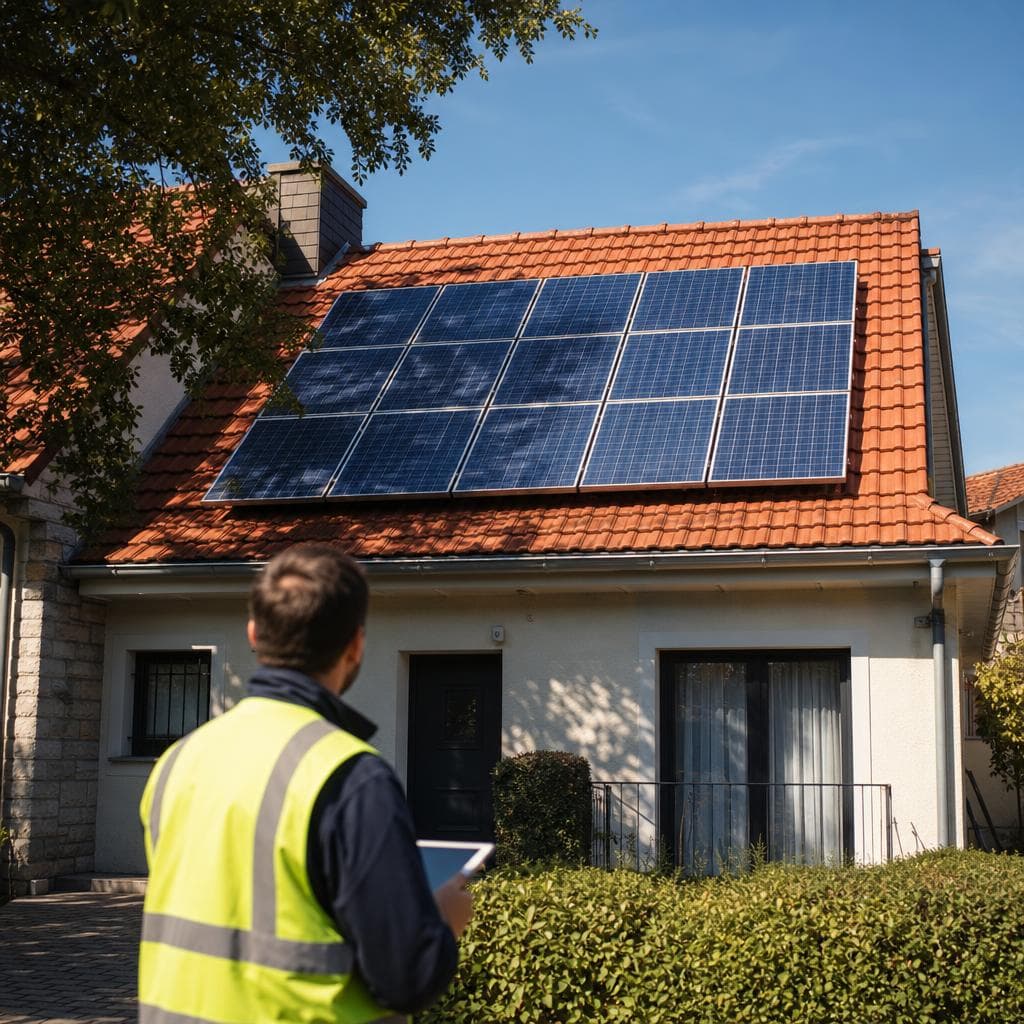
The best way to tell is with a real shading analysis, not a quick visual guess. Shade changes by season and time of day, so what looks acceptable at one moment may perform poorly across a full year. A proper solar site assessment should identify where shadows fall, how long they remain, and which roof sections still have strong solar access.
During a professional review, the goal is usually to answer these questions:
- Which roof planes receive the best sunlight?
- How much shade hits the roof during peak solar hours?
- Are the obstructions removable, such as tree trimming, or permanent, such as nearby buildings?
- Can the array be repositioned to avoid the worst shadows?
- Would microinverters or optimizers improve the result enough to justify the cost?
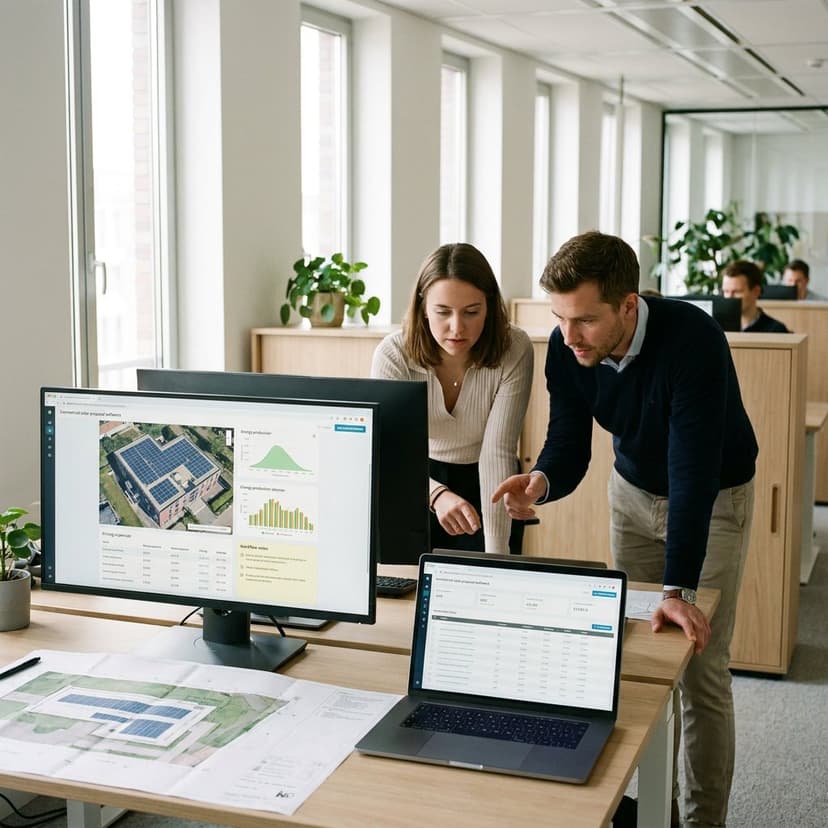
Installers may use tools such as on-site shade measurement devices or digital modeling. Today, remote-first workflows can also speed up early qualification. Enervio supports early-stage solar shading analysis with AI-driven remote property data, 3D building visualization, and sun and shadow analysis and solar panel simulation. That helps solar companies screen roofs, identify high solar-access areas, and prioritize better opportunities before a site visit or final engineering review.
Can a shaded roof still be worth it?
Yes, a shaded roof can still be worth it if the shading is limited, avoidable, or confined to less important production hours. A system may also make sense when electricity prices are high, when usage patterns align with the available generation window, or when there is enough unshaded roof area to build an efficient layout.
It may be less worthwhile when the roof has multiple overlapping issues, such as poor orientation, small usable roof space, and long periods of midday shade. In those cases, the system can still work technically, but the payback period may stretch too far.
What is the 33% rule in solar panels?
The phrase “33% rule” can mean different things depending on context, so it is important not to apply it loosely. In consumer searches, people often use it when they are trying to understand how much output loss or system oversizing is acceptable. It is not a universal shade rule that tells you whether your roof is too shady for solar panels.
For shade decisions, a broad percentage by itself is not enough. Losing 33% of output from late afternoon shade is very different from losing 33% during the highest-production hours. What matters more is the timing, pattern, and concentration of the shading. A formal production estimate is more useful than relying on a simplified rule.
What is the 120 rule for solar panels?
The 120 rule is an electrical code sizing concept related to panelboards and backfed breakers, not a rule for determining whether a roof gets too much shade. People often see the term while researching solar and assume it applies to roof suitability, but it belongs to system interconnection and electrical design.
If your concern is whether a roof is too shady for solar panels, the 120 rule does not answer that question. Shade assessment should focus on solar access and TSRF, annual production impact, roof layout, and equipment choice.
What to do if your roof is too shaded
If your roof turns out to be too shaded, that does not always mean solar is off the table. The right next step depends on what is causing the problem and whether there are other installation options available.
- Trim or remove trees where practical and permitted
- Use a different roof plane with better sun exposure
- Install fewer panels in the best-performing area only
- Choose microinverters or power optimizers for uneven sun conditions
- Consider solar on a garage, carport, outbuilding, or ground-mount structure if available
- Explore community solar if on-site solar does not make financial sense
For solar businesses, this is also where fast pre-qualification matters. Instead of sending teams to every uncertain property, early remote screening can filter out heavily shaded roofs and focus effort on the most viable prospects. Before a visit, you can also prepare for a solar site survey to help get accurate shade measurements.
FAQ
How much shade is too much for solar panels?
Too much shade usually means repeated shading across the best roof area during peak sun hours, especially from late morning to mid-afternoon. There is no universal percentage that applies to every home, so a shade analysis is the best way to tell.
Do solar panels work in partial shade?
Yes. Partial shade does not automatically rule out solar. Many systems can still perform well if the shading is limited and the design uses the right layout and electronics.
Are trees always a deal-breaker for solar?
No. Trees are one of the most common causes of shade, but their impact depends on location, height, seasonal leaf cover, and whether trimming is possible. Some tree shade is manageable, while dense south-side tree cover can be a major issue.
Can microinverters fix a shaded roof?
They cannot remove shade, but they can reduce how much one shaded panel affects the rest of the system. On partially shaded roofs, that can make a meaningful difference in energy production.
Is a north-facing roof with no shade better than a south-facing roof with some shade?
Not always. In many cases, a good south-facing roof with moderate shade still outperforms a north-facing roof. The answer depends on your location, roof pitch and orientation, shading pattern, and available installation area.
How is shading analysis done today?
It can be done through on-site measurement tools, satellite and aerial data, or 3D solar modeling. For early-stage qualification, platforms like Enervio help solar companies assess roof characteristics remotely and simulate sun and shadow before moving to final engineering.