Solar Canvassing Guide
Solar canvassing is door-to-door outreach used to identify qualified homeowners and book a next step, usually an assessment or consultation, not to close a full solar deal on the porch. It can still work, but results depend more on territory quality, route structure, credible leave-behinds, and fast follow-up than raw knock volume alone. The strongest teams treat canvassing as one channel inside a broader solar lead generation and appointment-setting process, guided by the solar appointment-setting playbook, so every conversation, no-answer door, and callback request is captured, qualified, and acted on quickly using lead routing and speed to lead in solar.
When door-to-door fits a modern solar growth strategy
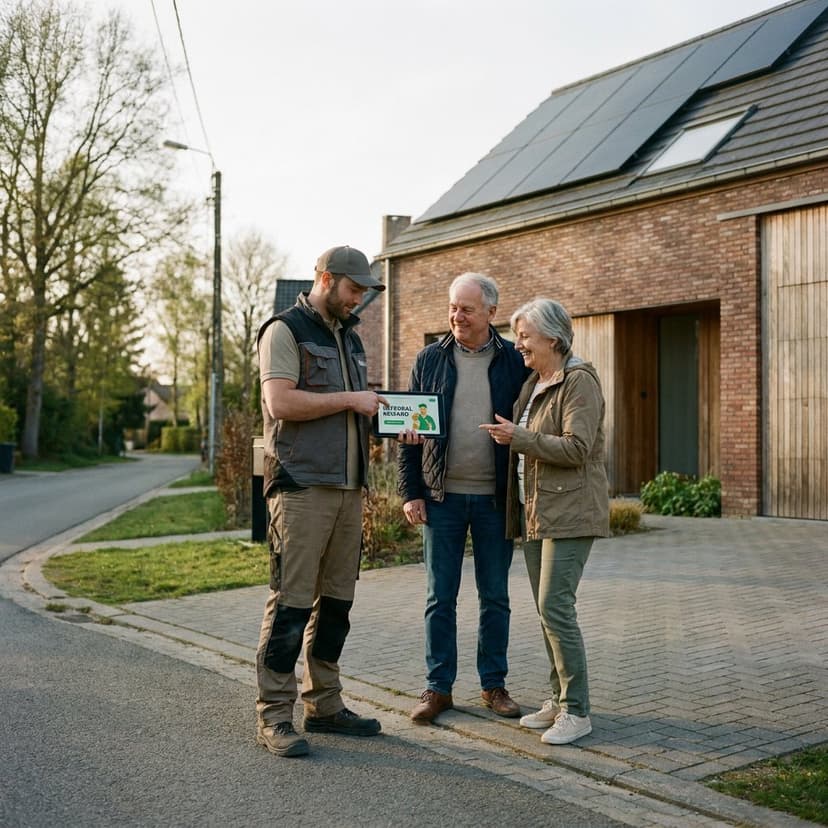
Solar canvassing still creates real opportunities because many homeowners need a short, in-person explanation before agreeing to an assessment. The goal is not a full doorstep close. It is to qualify interest, often with a pre-set solar appointments qualification checklist, use neighborhood timing and context well, and move the prospect into the same appointment-setting pipeline as every other lead source.
Choose neighborhoods for fit, not just geography
- Start with a real reason to be there: recent installs, referral density, adjacent expansion, or a strong match to your target audience for solar.
- Screen for owner occupancy, roof condition, shade or solar access, likely bill pain, subdivision age, and route efficiency before assigning reps.
- Use compact saturation zones or adjacent expansion intentionally instead of broad ZIP-code sweeps.
- Check rep capacity, revisit needs, and previously worked streets so the area is realistic to cover and worth a second pass.
Map territories reps can actually cover
Territory maps should remove ambiguity before reps hit the street.
| Territory rule | Why it matters |
|---|---|
| Use roads, entrances, and clear breaks | Reps know exactly where a route starts and stops |
| Prefer smaller zones | Full coverage beats patchy coverage |
| Split larger markets into named sections | Reduces duplicate knocks and conflicting notes |
| Name by market, neighborhood, and campaign window | Keeps ownership and analysis clear |
Turn a mapped area into a workable knock list
Build the knock list from addresses inside the exact boundary first. That keeps planning tied to the real route instead of a broad purchased file that later needs heavy trimming. Then screen only what affects execution: nearby homes to a recent install, easy re-drive clusters, duplicates, already worked addresses, and suppressed homes. The field team should receive a day-one list that is clean, usable, and aligned to the campaign.
Run the route like an appointment-setting process
- Give reps a clear sequence: timing the knock, opening with local context, using solar sales script examples, asking for the next step, leaving something behind, and logging the result immediately.
- Keep the interaction short and credible. The goal is trust and an assessment, not a porch-side lecture on financing or engineering.
- Plan for no-answer doors with a professional follow-up piece, a next-touch status, and a solar lead nurturing framework.
- A solar sales canvasser is responsible for homeowner engagement, basic qualification, lead capture, and appointment generation. That role clarity is especially useful for newer canvassers.
Make every door useful with a credible leave-behind
A leave-behind should make the next step obvious after the conversation ends.
| Element | What it should do |
|---|---|
| One clear offer or next step | Prevents confusion from a crowded service list |
| Contact details and trust markers | Support credibility with local identity, relevant coverage cues, and warranty language where applicable |
| Consistent branding | Matches the rep, vehicle, and website |
| Good print quality | Acts as a conversion factor after the rep leaves |
Track outcomes, ownership, and follow-up in one system
Assign every address or sub-route to a clear owner and use consistent statuses for knocked, no answer, follow-up, appointment set, and do-not-contact. Keep notes structured so the next rep or setter can act without guessing. Only collect or enrich the fields the downstream team needs, guided by what to collect on a solar lead form. Enervio takes this integrated approach so lead capture, follow-up, and appointment workflows do not live in separate systems.
Stay inside local canvassing and contact rules
Door-to-door legality, permit needs, allowed hours, and no-knock restrictions vary by jurisdiction, so teams need a local process before launching a route. Keep canvassing rules separate from calling, texting, email, and mail requirements, and build suppressions, exclusions, and approved talk tracks into the workflow before reps start knocking.
Use each canvas to improve the next pass
Review more than appointments. Look at actual coverage, awkward boundaries, overloaded reps, strong-response streets, and addresses that should stay excluded. Use those findings to tighten, expand, or redraw the next territory instead of repeating the same map by habit. Preserved ownership and historical notes make re-entry smarter and less repetitive for both reps and sales follow-up.
Doorstep questions your team should be ready for
These answers should stay short, accurate, and focused on moving the homeowner toward a qualified assessment. If a question needs more technical detail, support the follow-up with resources on sizing, utility billing, and homeowner expectations.
What is the 20% rule for solar?
This usually refers to utility or interconnection sizing limits, not a universal rule that works the same way everywhere. A rep should avoid giving a blanket answer at the door. The right response depends on utility policy, site details, and the homeowner’s load profile, so it is better handled in a proper qualification or proposal review.
How much do you get paid for selling electricity back to the grid?
There is no single payout figure. Export compensation depends on the local utility, tariff, and whether the area uses net metering, net billing, or another structure. Savings also depend on system design and self-consumption. Treat this as a proposal question that needs bill data—see how to collect utility data during qualification—and utility-specific modeling before anyone gives a number.
Why are people getting rid of their solar panels?
Panel removal is usually tied to roof work, a move, aging equipment, poor expectation-setting, or economics that changed after installation, not proof that solar never works. A balanced answer should explain why site fit, realistic savings assumptions, and long-term support matter before a homeowner commits.
Is it normal to receive telemarketing calls about solar panels?
Yes, many homeowners get solar calls because companies use multiple outreach channels, and lead resellers may contact the same person repeatedly. That is different from local canvassing. Reputable teams should respect consent, suppression requests, and channel-specific rules, while being transparent about who they are, why they are in the neighborhood, and what follow-up to expect.