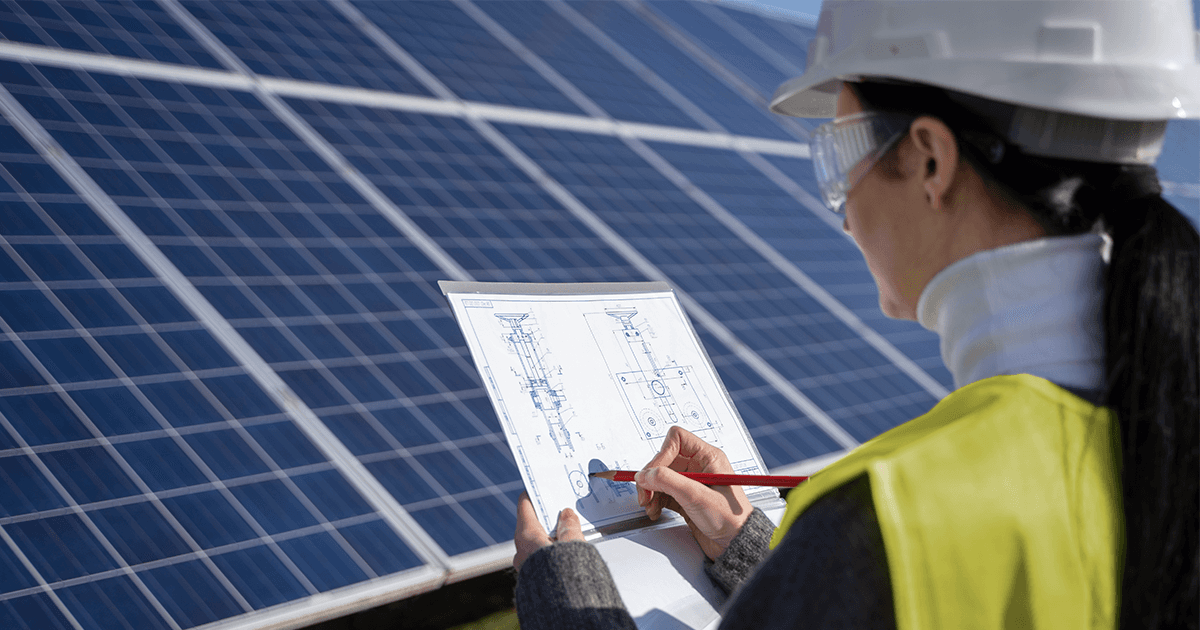
A solid solar site inspection is the difference between a smooth install and costly rework. With the right process and remote tools, you can collect accurate data, design faster, reduce change orders, and set clear expectations with the homeowner or facility manager. This guide shows you exactly what to check, how to balance on-site and remote surveys, and which technologies help you move from prospect to proposal in minutes.
What is a solar site inspection?
A solar site inspection, also called a solar site survey or solar site assessment, is the structured collection of property, structural, electrical, and shading data you need to design and permit a PV system. During an inspection you verify roof or ground conditions, measure usable array areas and setbacks, assess shading over time, evaluate the main service panel and available capacity, and plan equipment locations and routing. Good inspections document future loads like EV charging or heat pumps, confirm utility interconnection requirements, and capture photos that make the design and permitting package airtight. Inspections can be done on-site, remotely using high-resolution data, or with a hybrid of both.
Step-by-step site inspection process
Electrical service and main panel
Record service type and size, busbar rating, main breaker rating, available breaker spaces, grounding and bonding, and feeder sizes. Identify the service disconnect location, meter location, and any subpanels. Note existing or planned large loads that affect interconnection.
Roof and structure
Confirm roof material, age, and condition, rafter or truss spacing and orientation, roof pitch and height, and any signs of leaks or structural issues. For ground mount, review soil conditions, grading, setbacks, access, and trench paths.
Shading and obstructions
Map permanent and seasonal obstructions such as chimneys, vents, parapets, trees, neighboring buildings, and HVAC units. Use solar-access modeling to quantify annual shade losses and anticipate tree growth. For inspection criteria related to module performance, see our solar panel efficiency guide.
Layout, setbacks, and equipment placement
Measure array areas and fire code pathways, verify ridge and eave offsets, and mark feasible inverter, combiner, disconnect, and conduit routes. Consider noise, service clearances, and weather protection.
Customer goals and future loads
Gather utility bills and usage patterns, tariff information, backup needs, and any planned electrification like EV charging or induction that will change energy demand.
Documentation and photos
Capture labeled photos of the service panel interior and exterior, roof planes and obstructions, equipment locations, attic or rafters where accessible, and the main bonding jumper and grounding electrode system.
Solar site inspection checklist
- Verify address, AHJ, utility, and tariff.
- Service panel: busbar rating, main breaker, available spaces, conductor sizes, grounding and bonding, labeling needs.
- Roof: material, age, condition, pitch, rafter spacing, accessible attic verification.
- Array area: measurements, setbacks, pathways, obstructions.
- Shading: horizon, seasonal objects, annual solar access estimate.
- Equipment locations: inverters, disconnects, monitoring, conduit paths.
- Future loads: EV, heat pump, battery storage plans.
- Photos and notes sufficient to produce a permit-ready plan set.
On-site vs remote solar site survey
Remote solar site surveys leverage aerial imagery, LiDAR, and utility data to pre-qualify properties and produce accurate designs without a truck roll. On-site surveys still matter when structure, access, or electrical details cannot be confirmed remotely. Many teams use a hybrid approach: qualify and design remotely, then perform a targeted on-site validation when needed.
When to go on-site
- Uncertain roof condition or hidden structure that imagery cannot confirm.
- Service equipment is atypical, inaccessible, or requires upgrades.
- Historic, high-wind, high-snow, or strict fire code jurisdictions.
- Complex commercial sites with multiple services or roofs.
When a remote survey is enough
- Clear imagery and LiDAR confirm dimensions and pitch.
- Standard residential service equipment with known ratings.
- No significant shading or complex setbacks.
- Fast-turn proposals where a validation visit can follow contract.
Tools and tech that speed up surveys
Solar design software and 3D modeling
Modern design platforms convert aerial and LiDAR data into accurate 3D models, run hour-by-hour shade analysis, size arrays and electrical equipment, and generate production estimates and single-line diagrams. Templated code checks reduce plan set revisions and help ensure NEC and fire code compliance. Enervio’s AI-driven sales platform extends this by pairing remote property analysis with interactive 3D solar simulations and one-click quote generation, so you can deliver data-rich proposals in minutes. Not sure which platform fits your workflow? Use this feature-by-feature overview to compare solar software features.
Drones and high-resolution imagery
For sites with limited public imagery, drones capture current roof condition, obstructions, parapet heights, and thermal anomalies. Orthomosaics and photogrammetry improve measurements and layout accuracy. Use drone data to verify degradation, hot spots, or post-install QA on commercial arrays.
LiDAR, GIS, and utility datasets
LiDAR provides precise elevations for pitch and azimuth. GIS layers reveal parcel boundaries, zoning overlays, floodplains, and wildfire zones. Utility datasets and tariff libraries enable quick interconnection feasibility checks and bill savings modeling, reducing back-and-forth with customers and AHJs.
Permitting and zoning requirements
Every Authority Having Jurisdiction sets rules that affect solar layout and interconnection. Verify structural requirements, wind and snow loads, rooftop fire pathways and labeling, equipment clearances, and grounding and bonding. Confirm whether the NEC 120 percent busbar rule or supply-side taps apply, and align with utility metering and disconnect requirements. Some municipalities require structural letters or stamped plans, and many commercial projects need zoning reviews for height, screening, or easements. Collect the exact submittal checklist from the AHJ early to avoid revisions and delays.
Pro tips for smooth, accurate inspections
- Pre-qualify remotely to avoid unnecessary truck rolls.
- Bring a standardized checklist and photo matrix to every visit.
- Measure once, document twice – include labels in every photo.
- Ask about future loads to right-size interconnection and conduit.
- Design for maintenance: accessible equipment and clear pathways.
- Record AHJ and utility rules before you design, not after.
- Use consistent file naming so plan sets build themselves.
FAQ
What is a solar site assessment?
A solar site assessment evaluates a property’s suitability for PV by measuring usable area, shading, structural readiness, and electrical capacity. It also identifies permitting constraints, optimal equipment locations, and future load considerations. Assessments can be performed on-site, remotely with aerial and LiDAR data, or with a hybrid approach.
How much is a solar panel inspection?
For pre-install site surveys, residential pricing commonly ranges from 150 to 400 USD depending on market and scope. Commercial surveys vary widely, from 500 to several thousand dollars. Post-install inspections by the AHJ are typically covered by permit fees. Performance or thermal inspections for O&M often run 300 to 600 USD for homes and more for large arrays. For a deeper breakdown by line item and hidden overhead, see our cost of a solar site visit.
What is the 33 percent rule in solar panels?
There is no universal 33 percent rule in codes. In practice, people may reference a DC-to-AC ratio around 1.33 as a design guideline to maximize inverter loading with acceptable clipping, subject to manufacturer and utility limits. Separately, interconnections often follow the NEC 120 percent busbar rule, which caps PV backfeed based on panel busbar and main breaker ratings. Always verify local code and utility policy.
Want to move faster from lead to permit-ready design? Enervio uses AI to deliver remote property analysis, interactive 3D solar simulations, and one-click quote generation, helping teams produce accurate proposals in minutes.


