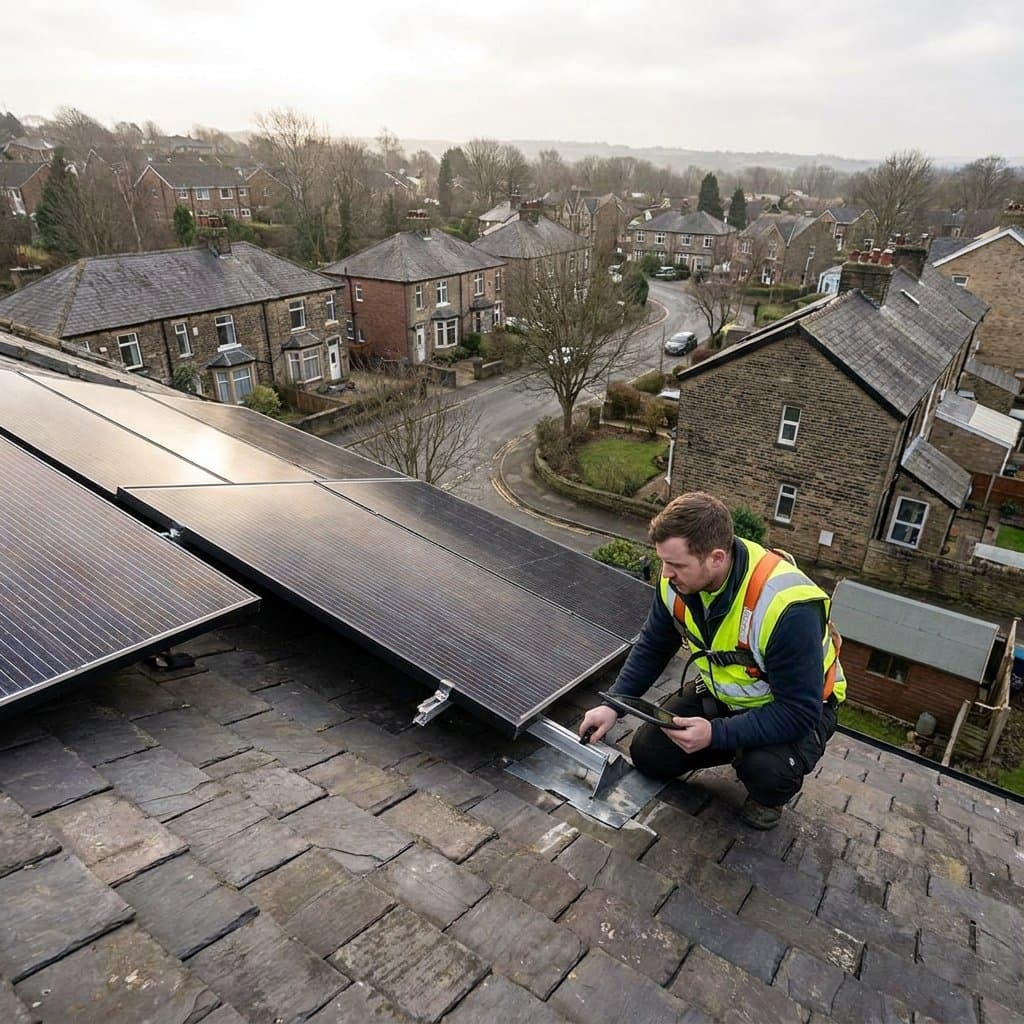
Roof Leaks and Solar Inspections
A roof leak can turn a profitable solar project into a costly delay fast. The risk usually does not come from the solar panels themselves, but from what happens around penetrations, flashing, roof condition, and poor pre-installation planning. If you are evaluating a home for solar, inspecting an existing system, or trying to prevent leaks before they start, the right solar inspection process matters.
For solar companies, sales teams, and operations teams, the real goal is not just finding damage after the fact. It is identifying roof risks early, documenting roof details clearly, and avoiding preventable redesigns, change orders, and post-install surprises. That is where a better pre-inspection workflow makes a difference.
Enervio supports that process with AI-driven remote property analysis, roof details, 3D solar simulations, property insights, and site survey preparation workflows. It is not an on-site leak inspection or roof repair service. Instead, it helps solar teams qualify properties faster and spot potential issues before they become expensive field problems.
Why roof leaks matter in solar inspections
Roof leaks and solar inspections are closely connected because every rooftop solar project depends on the condition of the roof underneath it. A system may be designed to last 25 years or more, so installing on a roof that already has leaks, soft spots, aging materials, or weak flashing creates long-term risk.
A strong inspection process helps you answer practical questions early:
- Is the roof in good enough condition for solar installation?
- Are there visible signs of leaks, water intrusion, or structural wear?
- Will penetrations and mounting points increase the chance of future leaks?
- Should the roof be repaired or replaced before panels go on?
- Can the site be qualified remotely before sending a field team?
These questions matter for homeowners, but they are especially important for solar businesses that want cleaner handoffs between sales, design, and installation. When roof issues are found too late, the result is often a stalled job, a revised proposal, or an unhappy customer.
Can solar panels cause roof leaks?
Yes, roof leaks can happen after a solar installation, but the panels themselves are usually not the problem. The most common issue is the installation method. Roof leaks with solar tend to happen when mounting penetrations are poorly sealed, flashing is installed incorrectly, roof materials are already deteriorated, or the roof was never properly assessed before the project moved forward.
That is why one of the most common questions in the market is how common are roof leaks with solar. The answer is that they are not inevitable, but they are also not rare when pre-install inspection standards are weak. Most leak problems are preventable when the roof is evaluated correctly and installation details match the roof type and condition.
What a solar roof inspection should check before installation
A useful solar inspection should do more than confirm that panels fit on the roof. It should evaluate whether the roof is suitable for a system that is expected to stay in place for decades. The most important pre-install checks include condition, structure, layout constraints, and leak risk areas.
Roof condition and signs of existing leaks
The first priority is determining whether the roof already shows signs of water intrusion or age-related failure. Common red flags include staining, soft spots, damaged shingles, worn tiles, deteriorated sealants, sagging areas, and visible damage around penetrations or transitions. If a roof already has leak symptoms, adding solar without resolving them first increases risk and can complicate future liability.
For solar teams, this is where clear property data and documentation matter. If a home appears to have aging roof materials or visible trouble spots, it may need a closer field review before a proposal advances.
Roof age and remaining service life
Even if there is no active leak, roof age matters. A roof that is near the end of its service life may still be a poor candidate for immediate installation. Removing and reinstalling solar later for roof replacement adds labor, scheduling complexity, and cost. In many cases, it is smarter to address roofing work first than to install solar on a roof that may need major work within a few years. If you are uncertain about timing, start by asking is your roof strong enough for solar.
Roof geometry, usable array area, and obstructions
Solar inspections should also confirm roof geometry and usable space. This includes measuring planes, setbacks, ridges, valleys, vents, chimneys, skylights, and other obstructions that affect array placement. These details matter because poorly placed attachments or rushed layout decisions can increase water management problems around penetrations and flashing. To maintain drainage and minimize leak potential, see where you shouldn’t place solar panels.
Enervio helps teams review these factors with property insights, roof details, and interactive 3D solar simulations, making it easier to reduce proposal errors early and understand how to prepare for a site survey.
Shading and site feasibility
Shade is usually discussed as a production issue, but it also affects inspection quality because it changes layout decisions. A roof with limited usable solar area may force tighter spacing, alternate panel placement, or different mounting choices. Remote sun and shade analysis gives teams a better idea of whether a project should move forward before investing more time in design or field visits.
Structural and mounting considerations
A complete solar inspection should also account for structural readiness and mounting compatibility. The roof type, roof slope, attachment plan, and support locations all influence leak risk. While structural verification may still require field validation or engineering review, pre-inspection preparation can identify possible concerns early and help teams avoid quoting the wrong solution. This is where roof structural checks before solar become especially important.
Common causes of roof leaks after solar installation
Most post-install leaks come from a short list of technical and planning failures. Understanding these causes helps you inspect better before the job and diagnose issues more accurately after installation.
Poorly sealed roof penetrations
Solar mounting usually requires penetrations at attachment points. If these penetrations are not sealed correctly, water can move into the roofing system and eventually reach the deck or interior. Sealants alone are rarely the whole answer. If the installation relies on surface-level sealing without proper water-shedding design, the risk increases over time as materials expand, contract, and age.
Incorrect or missing flashing
Flashing is one of the biggest differentiators between a durable installation and a future leak. Incorrect flashing can direct water under roofing materials instead of away from them. Missing flashing leaves the waterproofing strategy incomplete. This is one of the main reasons homeowners ask whether solar causes leaks. In many cases, it is really a flashing and penetration management issue.
Installing on an aging or damaged roof
Even a careful solar install can run into trouble if the roof materials are already brittle, cracked, curled, loose, or deteriorated. Older roofs are more likely to suffer damage during installation traffic, drilling, or attachment work. A weak roof can also hide pre-existing problems that become obvious only after the project is complete.
Damage around vents, skylights, and transitions
Leaks do not always occur directly under a panel. Water often travels from transitions, valleys, vent penetrations, skylights, chimneys, or conduit entry points before becoming visible inside the home. That is why a good inspection needs to assess the full roof system, not just where the array will sit.
Layout changes made too late in the process
When initial property review is weak, teams may redesign the system late, move array sections, add penetrations, or change equipment placement during or after the site visit. Each late-stage change creates more room for mistakes. Better remote pre-qualification reduces those surprises and supports cleaner execution.
Warning signs that a roof leak may be related to solar
If a leak appears after solar installation, timing matters, but symptoms matter more. Not every roof leak is caused by solar, yet the system should be investigated if issues begin after installation or appear near attachment zones and roof penetrations.
- Water stains on ceilings or upper walls
- Damp insulation or musty odors in the attic
- Visible moisture near roof penetrations
- Discoloration around mounting areas
- Peeling paint or bubbling drywall
- New leaks after heavy rain or wind events
- Evidence of cracked, lifted, or disturbed roofing materials near the array
One challenge with roof leak diagnosis is that the visible interior spot may not line up exactly with the exterior entry point. Water can travel along underlayment, decking, or framing before it shows inside. That is why documentation from the pre-install stage is so valuable. When teams know the original roof condition and planned mount locations, troubleshooting gets easier. For an overview of what inspectors check—such as watertight penetrations and mounting hardware integrity—see how solar panels are inspected.
Why pre-install inspections matter more than post-install fixes
Fixing a solar-related roof leak is usually more expensive than preventing one. A repair may require removing part of the array, checking the deck, replacing roofing materials, reinstalling flashing, resealing penetrations, and then putting solar components back. If damage has been present for a while, costs can rise further because of mold, insulation damage, or structural repairs.
That is why solar inspections should be treated as a risk-control step, not a formality. A strong pre-install process helps reduce:
- Failed installs on poor roof candidates
- Unexpected change orders
- Truck rolls for avoidable site issues
- Design revisions caused by bad roof data
- Homeowner disputes about pre-existing roof condition
- Permit and layout issues tied to inaccurate property information
For solar companies, this is also an operational advantage. When sales, design, and field teams work from better property data, fewer roof problems surface at the worst possible moment.
How remote solar inspections help reduce roof leak risk
Remote assessment does not replace every on-site verification step, but it can make the entire solar inspection workflow smarter. Instead of sending a field team to every lead with limited context, solar businesses can use remote property analysis to screen roof suitability, identify likely concerns, and prioritize the right opportunities.
Enervio is built for that pre-inspection stage. Its platform helps solar teams gather property data, review roof details, analyze shading, create 3D solar previews, and prepare more accurate quotes before deeper project commitment. That means teams can flag risk sooner and avoid wasting time on properties that may have roof condition issues or low installation viability.
Property insights before the site visit
Having roof details early helps teams qualify projects more efficiently. If the roof appears complex, aged, heavily obstructed, or limited in usable array space, you can adjust expectations before the survey. That improves proposal quality and reduces the chance of promising a layout that later needs major revision.
3D solar simulation and roof planning
Interactive 3D solar simulations help visualize usable roof areas and equipment placement in context. This can support better conversations with homeowners and better internal planning for site surveys. More clarity up front often means fewer rushed layout decisions that might create future leak risk.
Fewer unnecessary truck rolls
One of the biggest operational benefits of remote-first inspection preparation is reducing unnecessary field visits. When leads are pre-qualified more accurately, field teams spend less time on poor-fit properties and more time on viable projects. That saves time, lowers cost, and helps operations teams focus on installs with stronger success potential.
What to document during a solar inspection when leaks are a concern
If you want cleaner project handoffs and better protection against disputes, the inspection record should be specific. Whether the initial review is remote, on-site, or both, document the roof in a way that supports design, installation, and future troubleshooting.
- Current roof condition and visible wear
- Roof type and roofing material
- Approximate roof age if known
- Visible signs of leaks or water intrusion
- Obstructions, penetrations, and transition points
- Usable roof planes for array placement
- Shade conditions and production constraints
- Photos or visual references of key roof areas
- Notes on possible structural or mounting concerns
- Any recommendation for further field verification before install
This level of documentation helps establish whether a leak was likely pre-existing, whether the roof was a good solar candidate, and whether additional roofing review should have happened before installation.
How much does a solar inspection cost?
The answer depends on what kind of inspection you mean. A basic solar inspection may refer to a system performance or safety review. A roof-focused solar inspection is different because it may involve evaluating roofing materials, leak indicators, penetrations, structural concerns, and installation readiness.
For solar companies, the bigger cost question is usually not the inspection fee itself. It is the cost of getting the qualification process wrong. A missed roof issue can lead to redesign work, delayed installs, extra site visits, panel removal later, or homeowner dissatisfaction. In that context, investing in stronger remote property analysis and better site survey preparation can deliver a much higher return than cutting corners on early assessment.
Should you replace the roof before going solar?
In many cases, yes, if the roof is already near the end of its service life or showing signs of active failure. Solar and roofing timelines should be aligned. Since solar systems are long-term assets, the roof underneath them should have enough remaining life to justify installation.
You should be cautious about moving forward with solar if the roof has:
- Active leaks
- Soft spots or signs of water damage
- Broken, curling, or severely worn roofing materials
- Repeated repair history around penetrations or transitions
- Very limited remaining service life
This is also where remote-first qualification helps. If roof condition appears questionable during early property review, the project can be routed for deeper evaluation before sales promises or installation schedules are locked in.
What the 33% rule in solar panels means
The 33% rule in solar panels can mean different things depending on local policy, system sizing context, or utility program language. It is not directly a roof leak rule. In many cases, people asking about it are really trying to understand design limits, export policies, or how much solar capacity makes sense for a property.
For roof leak and inspection planning, the more useful focus is whether the roof has enough safe, usable area for the proposed system and whether the array design fits the roof without forcing poor attachment decisions. A smaller, well-planned layout on a sound roof is better than an oversized design pushed onto a poor candidate.
Why selling a house with solar panels can be harder when roof details are unclear
Another common concern is why it can be difficult to sell a house with solar panels. The problem is not always the solar itself. It is often uncertainty around ownership structure, roof age at time of installation, maintenance records, or whether the roof may need work under an existing system.
If a buyer suspects hidden roof issues or future removal-and-reinstall costs, the home becomes harder to evaluate. That is why clear inspection history and documented roof condition at the time of installation matter. Better pre-install workflows today can reduce friction in future resale conversations.
Best practices for solar companies managing roof leak risk
For solar businesses, avoiding leak-related problems is part sales discipline, part workflow discipline, and part installation quality control. The strongest teams do not treat the roof as a checkbox. They treat it as a core project variable from the first lead review onward.
- Pre-qualify roof suitability before investing heavily in design
- Document visible roof condition early and clearly
- Use roof details, shade analysis, and 3D previews to refine feasibility
- Flag aging roofs before quoting a long-term system
- Make sure sales, design, and operations work from the same property data
- Reduce late-stage layout changes that increase installation risk
- Set expectations when on-site verification is still required
Enervio supports these steps with remote property analysis, one-click quote generation, property insights, and pre-inspection preparation workflows that help teams qualify faster and reduce avoidable surprises.
FAQ
How common are roof leaks with solar?
They are not guaranteed, but they are common enough to be a serious concern when the roof is old, the inspection was weak, or penetrations and flashing were handled poorly. Most solar roof leaks are preventable with better planning and installation practices.
Do solar panels themselves leak?
No. The risk usually comes from the roof penetrations, mounting system, flashing, conduit entry points, or pre-existing roof problems that were not addressed before installation.
What should a solar inspection include to reduce leak risk?
It should include roof condition, signs of existing leaks, roof age, roof geometry, usable array area, obstructions, shading, mounting considerations, and documentation of any concerns that could affect installation quality or long-term roof performance. For a practical reference, a solar site inspection checklist can help teams standardize what they review.
Can a remote inspection detect every roof leak issue?
No. Remote assessment is best used for pre-qualification, planning, and identifying likely concerns before the site visit. Some issues still require on-site verification. The value of remote review is that it helps teams focus field resources where they are most needed.
How does Enervio help with roof leaks and solar inspections?
Enervio does not perform on-site roof inspections or leak repair. It helps solar teams prepare better with AI-driven remote property analysis, roof details, property insights, 3D solar simulations, shade analysis, and workflow tools that support smarter site survey preparation.
When should a roof be reviewed before solar installation?
As early as possible. Roof suitability should be checked before the final proposal, not after contracts and expectations are already set. Early review reduces redesigns, delays, and preventable change orders, especially when you assess whether the roof is structurally sound and installation-ready.
Is it better to replace an old roof before installing solar?
Usually yes, if the roof is near the end of its service life or has known leak issues. It is generally more cost-effective to address roofing work first than to remove and reinstall solar later.
Why is documentation so important in solar inspections?
Good documentation helps teams design more accurately, supports better homeowner communication, and makes future troubleshooting easier if a leak or performance issue appears later.


