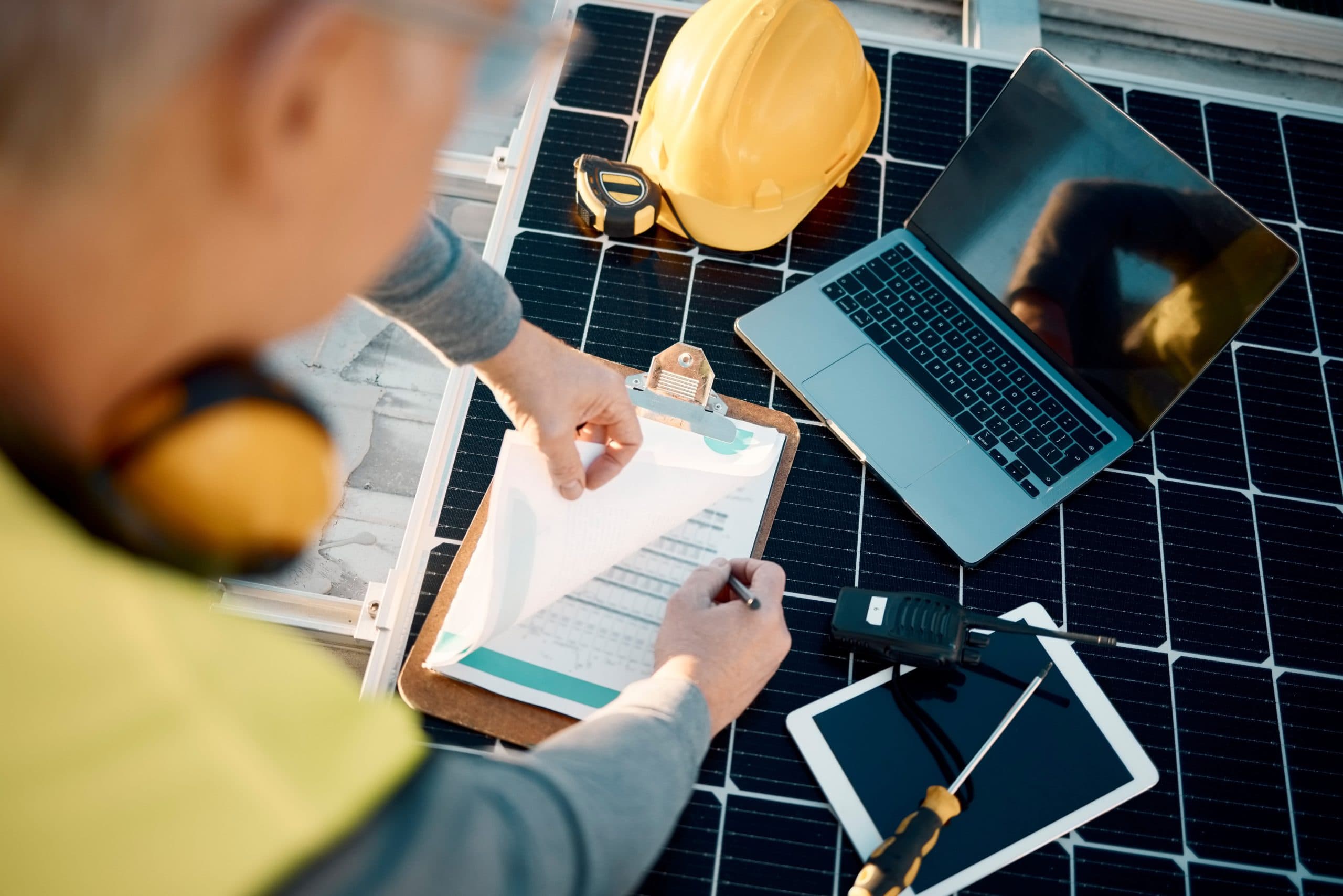
Before a system can power your home, most jurisdictions require solar panel permits, plan review, a solar installation inspection, and utility approval. Knowing the permit requirements for solar panels helps you budget time and cost, avoid rework, and switch on faster. Expect local rules to vary by Authority Having Jurisdiction and utility, from roof access pathways to interconnection paperwork.
What permits do you need?
Most homeowners need a building permit for solar panel installation, an electrical permit, and a utility interconnection agreement. The building permit covers structural safety and roof loading; the electrical permit covers wiring, overcurrent protection, and labeling; the interconnection agreement allows you to tie into the grid and receive net metering where applicable. Extra approvals may apply in wildfire or high wind zones, historic districts, for ground mounts, battery storage, a solar system for a detached garage, or trenching to outbuildings. Always verify with your local AHJ and utility before you submit. When selecting modules, ensure they meet performance and listing requirements; the solar panel efficiency guide (2025) provides useful background for compliance.
The solar permit process in 4 steps
First, finalize your system design, including module and inverter selection, array layout, attachment method, conductor sizing, and any main panel upgrade or battery integration. If your jurisdiction or installer requires a pre-permit assessment, review the cost of a solar site visit to set expectations. Second, prepare and submit your application with site plan, structural and electrical drawings, product datasheets, and required forms to the AHJ and utility. If you’re evaluating software to streamline permitting and project workflows, see the feature-by-feature comparison of Enervio vs alternatives. Third, wait for review and respond to comments; some jurisdictions use SolarAPP+ for instant or next day permits on standard residential systems, which can significantly cut review time. Fourth, after approval, schedule installation and inspections; then complete utility requirements for meter swap and permission to operate. If a submittal is incomplete or design changes midstream, expect resubmittals and delays. Clean drawings, equipment listings, and accurate property details are the fastest path to yes.
Solar panel permit requirements: documentation checklist
Expect to provide a scaled site plan with roof plan and array layout; a structural package with attachment details, rafter or truss specs, point loads, and calculations; electrical single line and three line diagrams; product cut sheets and UL listings for modules, inverters, racking, and rapid shutdown devices; labeling schedule; fire setbacks and pathways; mounting and grounding details; load calculations for service equipment and any main panel upgrade; battery storage details if included; and, where required, a Professional Engineer stamp and HOA approval. Utilities typically require a separate interconnection application, spec sheets, and sometimes an as-built diagram after installation.
Timelines and solar panel permit cost
Review and permit issuance typically range from about 3 weeks to 3 months, depending on jurisdiction volume, project complexity, and resubmittals. Where SolarAPP+ is available and your design qualifies, permits may be issued the same day. Utility interconnection can add days to several weeks, especially if a meter upgrade or transformer work is needed. Solar panel permit cost varies by location and system size, often a few hundred dollars per permit, with additional fees for plan review, inspections, and utility processing. Accurate first-time submittals reduce both delays and soft costs.
DIY vs professional permitting
Many places allow you to apply for a permit to install solar panels yourself, and DIY solar permit services can help assemble drawings and forms. However, some AHJs limit homeowner installs, and many utilities require a licensed installer for interconnection. If you go DIY, confirm local rules, use listed equipment, and be ready to satisfy structural and electrical code requirements. Hiring a qualified contractor typically shortens review cycles and avoids costly revisions, which can outweigh savings from doing it yourself.
After installation: inspection and permission to operate
Expect a building and electrical inspection after installation. Inspectors verify attachment spacing and fasteners, waterproofing, grounding and bonding, conductor sizing, overcurrent protection, disconnects, placards, and rapid shutdown operation. Corrections must be addressed before final sign off. Your utility then completes the interconnection review, performs a meter swap if needed, and issues permission to operate. Keep your approved plans, inspection card, and interconnection documents on file for future service or resale.
Common pitfalls that trigger rejections
Missing or incorrect fire setbacks; incomplete single line diagrams; unlisted or mismatched equipment; structural calculations that ignore existing roof loads; lack of details for attachment torque and sealant; forgetting main panel upgrades in load calcs; inconsistent conduit sizes between drawings and spec sheets; omitting rapid shutdown details; submitting historic district projects without planning approval; treating a detached garage array or solar power outlets for a shed as part of the main dwelling without separate permits. Catch these early to avoid resubmittals.
FAQs
What permission is needed for solar panels?
Typically a building permit, an electrical permit, and a utility interconnection agreement. Some projects also need planning approval for historic districts, ground mounts, batteries, or high wind zones.
Can you legally install your own solar panels?
Often yes, but rules vary. Some AHJs allow homeowner installs, others require licensed contractors. Utilities may require a licensed installer for interconnection. Confirm with your AHJ and utility.
How long does the solar permit process take?
From about 3 weeks to 3 months. Standard systems in SolarAPP+ cities can be much faster, while complex designs, corrections, or utility upgrades add time.
What happens if you install without a permit?
You risk fines, stop work orders, removal or rework at your expense, insurance and warranty issues, and denial of interconnection or incentives. Always secure approval first.
Do you need a permit for solar power outlets for a shed?
Yes in most cases. Running power to a shed or a detached garage typically needs its own electrical permit, and an array on that structure may require a separate building permit.
What is the 20% rule or the new California law on solar?
There is no universal 20% rule. Local fire codes set roof access pathways and coverage limits. California policies like NEM updates affect compensation, not local permit requirements.


