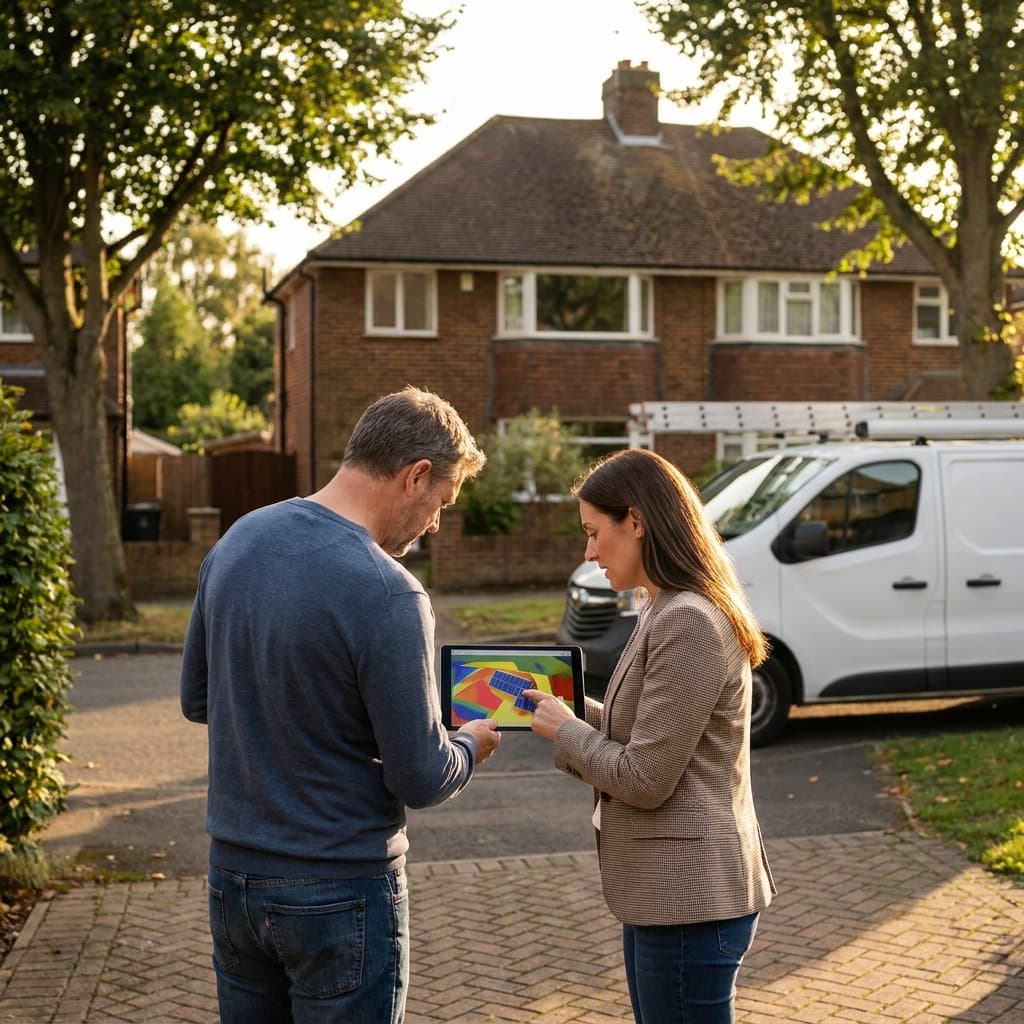
How to Find Solar Customers
Finding solar customers is not about using every marketing channel at once. It is about getting in front of the right homeowners at the right moment, qualifying them fast, and following up before interest cools off. If you want to know how to get solar customers consistently, the best results usually come from a mix of local search, paid ads, referral systems, educational content, and a tight follow-up process.
For most solar companies, the biggest problem is not a complete lack of demand. It is wasted demand. Leads come in with poor fit, slow response times, weak landing pages, or no clear system to move people from first click to booked appointment. The companies that grow are the ones that make it easy for prospects to raise their hand, get answers, and take the next step.
This guide breaks down the most effective ways to find solar customers in 2026, with practical tactics you can actually use.
Start with what a good solar customer looks like
Before you spend more on lead generation, define who you actually want. More leads do not help if your team spends time on renters, low-intent shoppers, homes with heavy roof shading, or people outside your service area.
A qualified solar customer will usually match several of these signals:
- They own the property
- They live in your target geography
- They have a roof or property suitable for solar
- They pay enough for electricity to justify interest
- They are actively researching cost, savings, or installation
- They are likely to make a decision within a realistic timeline
If you serve both residential and commercial markets, separate them early. Residential solar leads usually need simpler messaging around savings, financing, and installation. Commercial buyers often need a longer sales process, more stakeholders, and more documentation. When your marketing speaks to both at the same time, conversion rates often drop for both.
To avoid wasted spend and improve lead quality from the start, use this guide to identify your solar target audience.
Use local SEO to capture high-intent solar demand
One of the best answers to “how to find clients for solar panels” is local SEO. People who search for terms like “solar installer near me” or “solar company in [city]” already have intent. They are not browsing casually. They are looking for a provider.
Your local SEO foundation should include:
- A fully optimized Google Business Profile
- Service pages for each target location
- Clear NAP consistency across listings
- Local keywords in page titles, headings, and copy
- Fast mobile pages with strong call-to-action placement
Create location pages only where you can provide real value. A strong page should answer what local customers care about: installation timelines, permitting expectations, sunlight conditions, roof considerations, financing options, and savings potential. Thin city pages rarely help.
If you want better lead quality, local pages should also pre-qualify prospects. Include questions your buyers already have, such as whether their home is a fit, how long installation takes, and what information they need to request an estimate. For a deeper strategy, see local SEO for solar installers.
Run paid search campaigns for customers already looking for solar
Paid search is one of the fastest ways to get solar customers because it puts you in front of people who are already searching with intent. It is especially useful if your organic visibility is still growing or if you want to test demand in a new market quickly.
Focus on high-intent keywords such as:
- solar company near me
- home solar installation
- solar panel cost for home
- best solar installer in [city]
- solar quote
The mistake many companies make is sending paid traffic to a generic homepage. A better approach is to use dedicated landing pages that match the search. Someone searching for pricing wants cost clarity. Someone searching by location wants local relevance. Someone comparing options wants trust and next-step simplicity.
Strong solar landing pages usually include:
- A headline tied closely to the ad keyword
- A simple form with low friction
- Clear service area information
- Education around savings, process, or roof fit
- A direct next step such as estimate request or appointment booking
Paid search works even better when paired with qualification logic. If you can check property fit, roof context, homeowner status, or timing before the sales call, your team spends more time on likely buyers and less time on weak leads. For setup, keywords, and optimization checklists, see PPC for solar leads.
Build educational content that attracts and pre-sells prospects
Educational content is one of the most reliable long-term ways to find solar customers because buyers do research before they talk to sales. They want to understand cost, savings, incentives, timelines, maintenance, and whether solar makes sense for their property.
That creates an opportunity. If your content answers those questions clearly, you do two things at once: you attract search traffic and you build trust before the first conversation.
Useful content topics include:
- How much do solar panels cost in your area
- How to know if your roof is good for solar
- Solar financing options explained simply
- What homeowners should expect during installation
- How to compare solar quotes
- Common reasons solar projects do or do not make sense
The goal is not to publish content for the sake of volume. The goal is to answer buyer questions that lead naturally into an estimate, consultation, or qualification step. Good solar content reduces friction because the prospect arrives better informed and more ready to act. If you need a process, use this framework for SEO content that attracts solar buyers.
Make your website convert visitors into leads
You can drive traffic from SEO, ads, social, and referrals, but if your site does not convert, customer acquisition stalls. Many solar companies lose leads because their pages are slow, unclear, or ask too much too early.
Your website should help visitors move from curiosity to action without confusion.
What your solar pages need
- Clear headline focused on the offer
- Visible primary CTA above the fold
- Short forms that are easy to complete on mobile
- Useful information that answers obvious objections
- Simple navigation and fast page speed
- Appointment booking or fast-response request options
What hurts conversion rates
- Generic copy that could apply to any installer
- Too many form fields too early
- No service area clarity
- No explanation of what happens after form submission
- Weak follow-up after the lead comes in
If you want to find solar customers more efficiently, your website cannot just collect traffic. It has to qualify, educate, and move people toward a booked conversation. For examples and layouts, see landing pages that convert solar leads.
Use remarketing to bring back warm solar prospects
Most people do not convert on the first visit. They compare providers, discuss the decision with family, check financing, or simply get distracted. That is why remarketing matters. It helps you stay visible after the initial website visit or ad click.
Remarketing is especially useful for solar because the buying journey often involves multiple visits before a decision. A prospect might first read about costs, then return later to request a quote.
Good remarketing audiences can include:
- Visitors to pricing pages
- People who started but did not complete a form
- Visitors from Google Ads who did not book
- Users who engaged with local service pages
Your message should match the stage of interest. Instead of repeating a broad sales pitch, use reminders that reduce friction, such as offering a quick estimate, property check, or consultation.
Create a referral engine instead of waiting for word of mouth
Referrals are often high-converting because trust transfers before the first conversation. But referrals work better when you build a process around them instead of hoping past customers will mention you on their own.
A simple referral system can include:
- A clear referral offer for customers and partners
- Short shareable messaging by text or email
- A dedicated referral landing page
- Tracking so you know which sources actually convert
Partnerships can also help you get solar customers. Good partners may include roofers, electricians, real estate professionals, home improvement businesses, and local community organizations. The best partnerships happen when both sides understand who the ideal lead is and how handoff works.
Use social media to create demand and support trust
Social media is usually not the highest-intent channel for solar leads, but it can support customer acquisition well when used correctly. It helps you educate, stay visible, and retarget people who already know your brand.
Useful social content often includes:
- Short videos answering common homeowner questions
- Before-and-after project visuals
- Local savings and energy education
- Financing explainers
- Myth-busting posts about solar suitability or costs
Paid social can also work for top-of-funnel demand generation, especially when paired with strong landing pages and automated follow-up. Just remember that social leads often need more nurturing than search leads because intent starts lower.
Follow up faster than your competitors
One of the biggest differences between average and high-performing solar sales teams is speed to lead. If a prospect fills out a form and waits hours or days for a response, conversion drops quickly. In many markets, being first matters as much as being better.
If you are asking how to get solar customers consistently, fast follow-up is not optional. It is part of lead generation.
A strong follow-up system should include:
- Immediate lead routing to the right rep
- Automated confirmation by email or SMS
- Rapid first contact attempt
- Multiple follow-up attempts over a structured timeline
- Clear status tracking inside your CRM
Many solar companies improve results simply by responding faster and more consistently. Automation helps here. If your workflow can confirm the inquiry, share next steps, and prompt booking right away, more opportunities stay warm.
Qualify leads early to protect your sales team’s time
Lead generation becomes far more profitable when you identify fit before the full sales process starts. That does not mean adding a long, painful form. It means collecting just enough information to separate likely buyers from poor-fit inquiries.
Useful qualification points can include:
- Homeowner status
- Address or property location
- Utility bill range
- Timeline for going solar
- Interest in purchase versus financing
More advanced systems can also layer in property insights such as roof geometry, shading, sun exposure, and local permit context. That can improve lead quality before a rep spends time building the opportunity.
This matters because the best solar customer acquisition strategy is not just about more leads. It is about more qualified opportunities, supported by clearer solar buyer personas and messaging.
Compare the main channels for finding solar customers
| Channel | Best for | Speed | Lead intent |
|---|---|---|---|
| Local SEO | Long-term inbound demand | Medium to slow | High |
| Paid search | Immediate lead flow | Fast | High |
| Content marketing | Education and trust building | Medium to slow | Medium to high |
| Remarketing | Recovering warm traffic | Fast | Medium to high |
| Referrals | High-trust opportunities | Medium | High |
| Paid social | Demand generation and retargeting | Fast | Low to medium |
| Partnerships | Consistent external lead flow | Medium | Medium to high |
A practical system for getting solar customers consistently
If you want a predictable approach, do not think in isolated tactics. Think in stages.
- Capture demand with local SEO and paid search
- Educate and pre-sell with strong service pages and content
- Convert with focused landing pages and simple forms
- Qualify with homeowner and property-fit checks
- Book faster with automation and immediate follow-up
- Recover missed opportunities with remarketing and nurture flows
This is where systems matter. A solar company can generate more value when ads, landing pages, qualification, follow-up, and appointment booking all work together instead of living in separate tools. That is also why many teams move toward a more integrated setup that combines traffic generation with lead capture, automation, and sales workflow support.
FAQ about finding solar customers
How do you find customers for solar?
You find customers for solar by combining high-intent channels like local SEO and Google Ads with trust-building channels like educational content, referrals, and remarketing. The key is to attract the right homeowners, qualify them quickly, and follow up fast enough to book the opportunity.
How do I get solar customers if my company is new?
Start with the channels that create demand fastest: paid search, optimized landing pages, and a strong Google Business Profile. Then build content and local SEO for long-term growth. New companies often need quick traffic first and brand authority second.
What is the best way to get solar leads?
There is no single best source for every market, but the strongest mix is usually paid search for immediate intent, local SEO for ongoing inbound demand, and automated follow-up to improve conversion. If your current leads are weak, improve qualification before increasing spend. You can also compare the best solar lead generation channels to prioritize where to invest next.
Should solar companies buy leads?
Buying leads can help if you need volume quickly, but quality varies and shared leads can create heavy competition. Many solar companies get better long-term results when they generate their own demand through ads, SEO, landing pages, and a repeatable follow-up system.
Is it hard to get into solar sales?
It can be competitive, but demand still exists for teams that understand timing, lead quality, education, and follow-up. The challenge is usually not just finding people who are interested. It is building a process that turns that interest into qualified appointments and closed deals.
What is the 33% rule in solar panels?
The phrase can mean different things depending on context, so it should not be treated as a universal solar sales rule. In customer acquisition, it is more useful to focus on measurable factors like cost per lead, lead-to-appointment rate, appointment-to-close rate, and customer acquisition cost.
What matters most when you want to find solar customers
The companies that win do not rely on a single tactic. They combine visibility, qualification, and fast follow-up into one system. If you want to know how to find solar customers at a higher volume and better quality, focus on three things first: show up where intent exists, make conversion easy, and respond while the lead is still warm.
That is the difference between generating clicks and generating real solar opportunities, especially if you want to generate solar leads without cold calling.


